Back
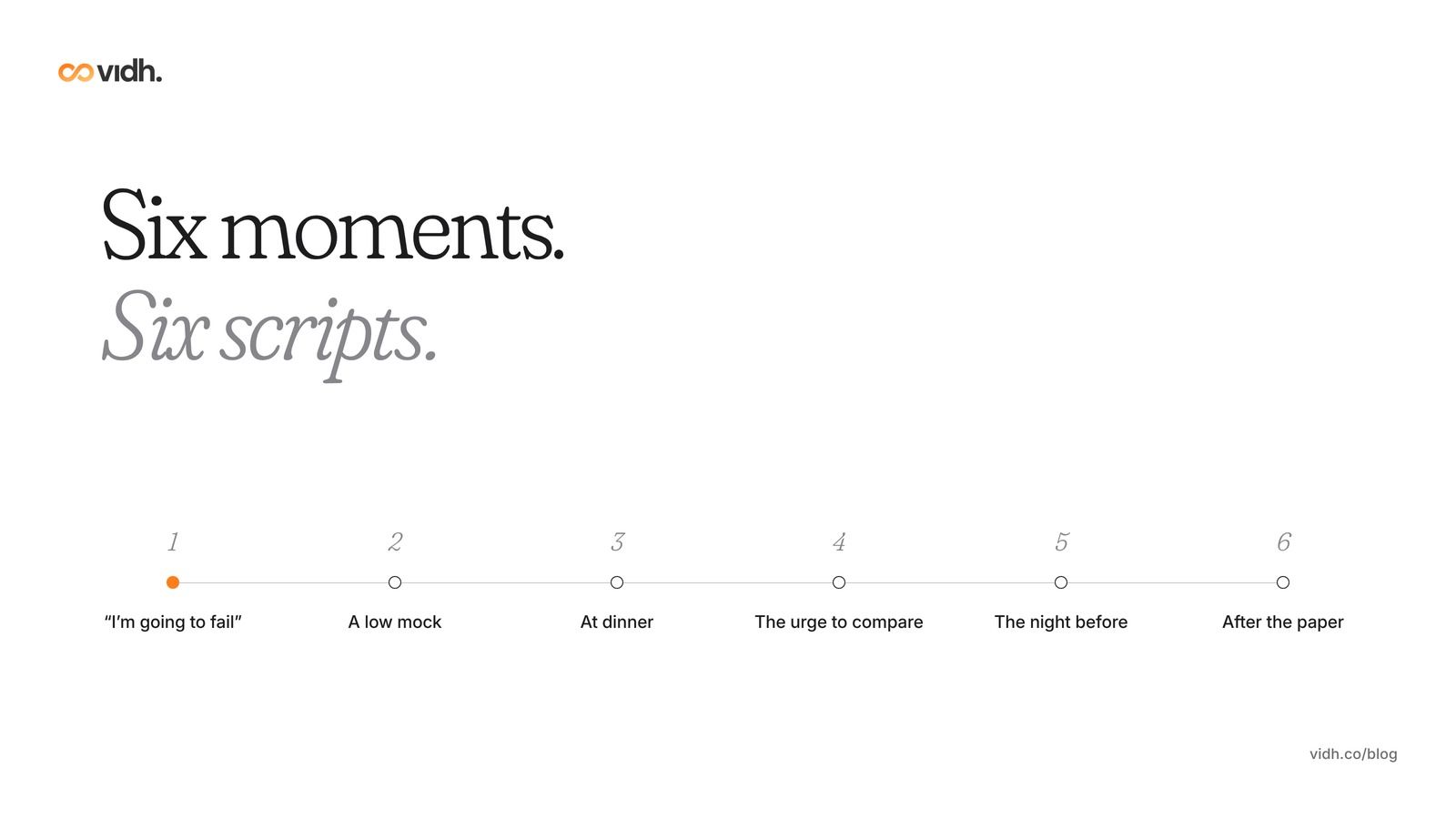
Board Exam Stress: 6 Things to Say (and Not Say) at Home
5 min read
Board exam stress at home? 6 scripts for what to say (and not say): 'I'm going to fail', a low mock, dinner, comparisons, and the night before.
By Bhagya · Last updated: 29 October 2026
Short answer: In board-exam season, almost anything a parent says at home can land as pressure about marks. Six moments come up again and again: when your teen says "I'm going to fail", after a low mock result, at the dinner table, when you feel the urge to compare, the night before a paper, and after it. The six scripts below give you words for each, and what to avoid. The pattern is the same every time: name the feeling instead of arguing with it, swap marks talk and comparisons for an open question, and listen more than you advise. Behind the words, protect sleep (most teenagers need 8 to 10 hours), meals and a little movement. And if worry or low mood is severe, lasts, or gets in the way of daily life, talk to your family doctor or the school counsellor.
You sit down to dinner, and the question is out before you can stop it: "So, how much did you finish today?" Your teenager goes quiet, or snaps, and the meal is over. In exam season, even questions meant as care can sound like pressure.
This guide starts with what to actually say. It gives you six short scripts for the moments that come up most at home, each with what to avoid, what to try instead and why it helps. After the scripts, it covers how to tell normal nerves from heavier stress, the sleep, food and movement basics, and when to get outside help, whichever board your child is sitting.
For many families the board-exam countdown starts the day the date sheet comes out. CBSE's Class 10 and 12 date sheet for 2027 is expected shortly: last year the board published a tentative date sheet on 24 September and the final one on 30 October (CBSE examination circulars; Indian Express). Once the dates are on the fridge, the pressure at the dinner table often rises with them. If you want the exam rules themselves, our guide to CBSE's two board exams in 2027 covers them.
This guide is general information, not medical advice.
Key takeaways
- Your words matter more in exam season. Six short scripts below cover the moments that come up most: "I'm going to fail", a low mock, dinner, the urge to compare, the night before and after the paper.
- Know what not to say. Skip comparisons with siblings, cousins or classmates, marks questions at dinner, "Which questions did you get wrong?" and "Stay up and go through everything one more time."
- Nerves are normal. The NHS reminds parents that "it's normal to feel anxious" before exams. The aim is to keep worry manageable, not to remove it.
- Sleep comes first. Most teenagers need 8 to 10 hours a night. All-night cramming usually does more harm than good.
- Stay steady, not another tutor. Ask how you can help rather than taking over. Your steadiness at home matters more than another hour of revision you supervise.
- Know when to get help. If anxiety or low mood is severe, persistent or stops your child functioning day to day, talk to a doctor or the school counsellor.
What should you say, and what should you avoid? Six scripts
Words matter more in exam season, because everything sounds like it's about marks. The APA's advice is to be available, listen actively, and "soften strong reactions", because "kids will tune you out if you appear angry, defensive or judgmental" (APA). These six scripts put that into everyday words: for each moment, what to avoid, what to try instead, and why it helps. Adapt them to your family and your language.
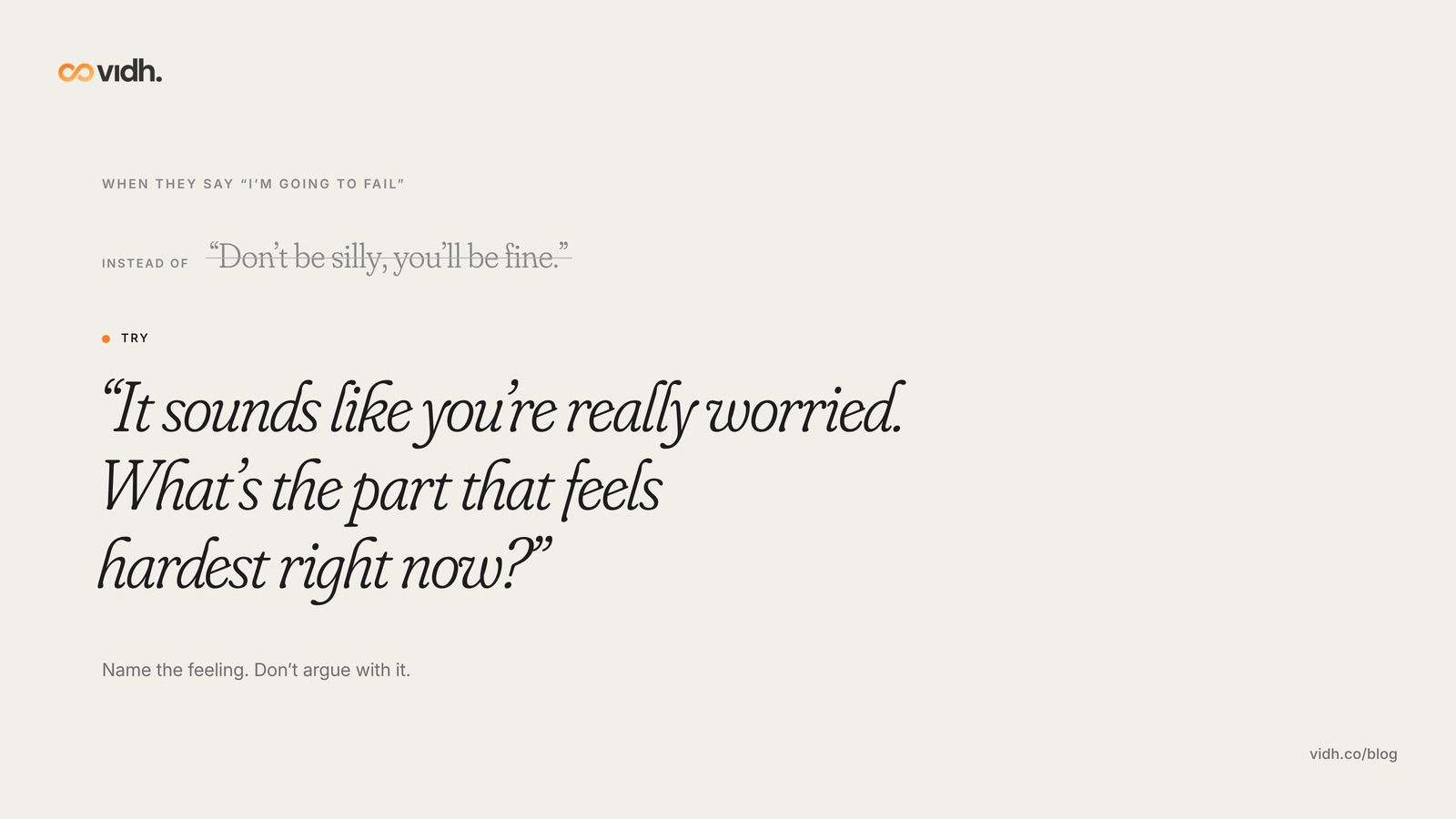
1. When your child says "I'm going to fail"
- Instead of: "Don't be silly, you'll be fine." or "Then study harder."
- Try: "It sounds like you're really worried. What's the part that feels hardest right now?"
- Why: It names the feeling without arguing with it, and turns a big fear into one problem you can look at together. The APA suggests that when children use negative self-talk, parents don't just disagree but help them check whether it's true, or remind them of times they worked hard and improved.
2. When a mock or pre-board result is low
- Instead of: "How did you get only this much?"
- Try: "That one didn't go the way you wanted. What do you think happened, and what would help for the real one?"
- Why: A mock is practice. Treating it as information, not a verdict, keeps your child talking to you about what went wrong.
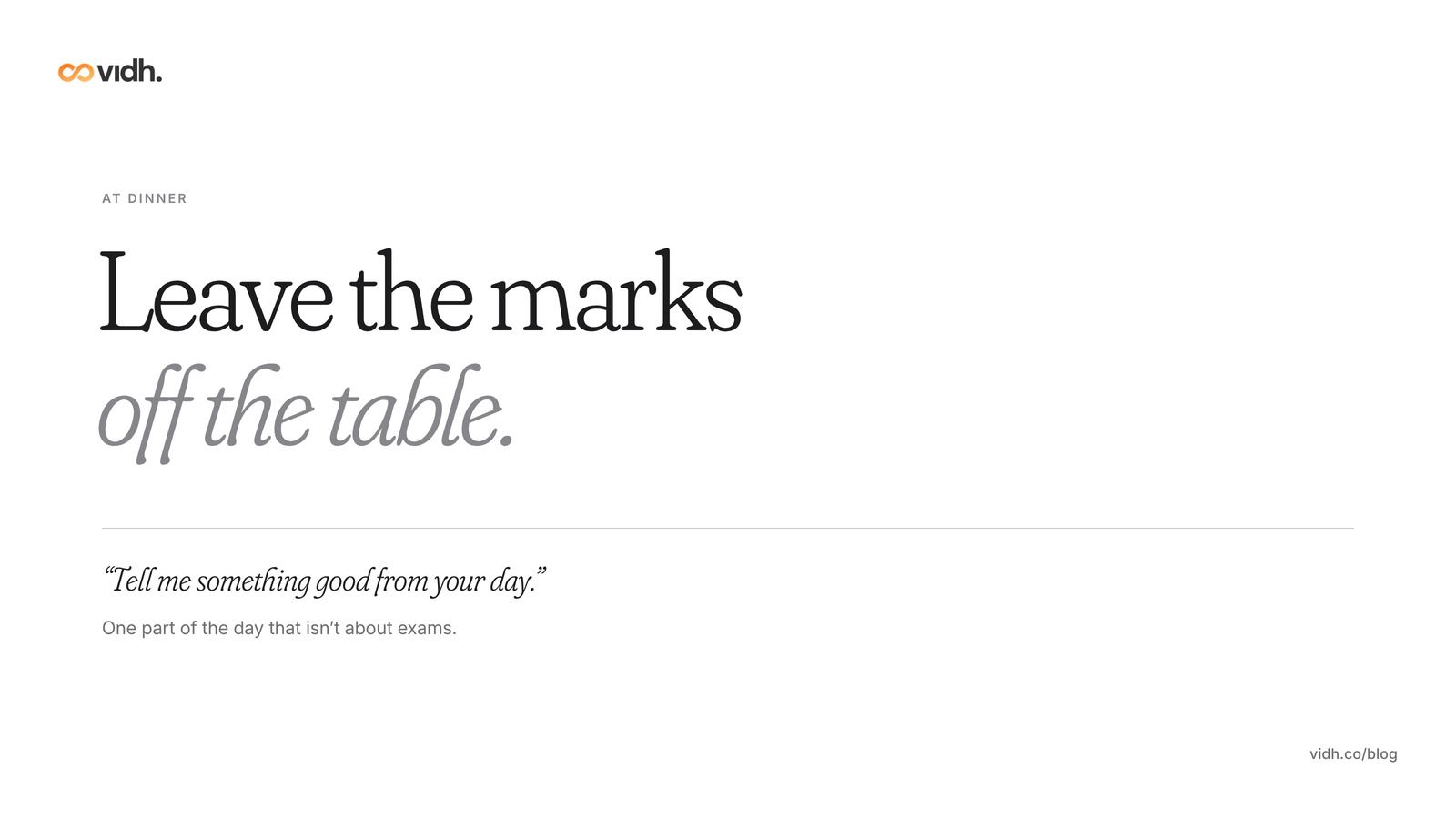
3. At dinner: no marks talk
- Instead of: "So, how much did you finish today? What's the plan for chemistry?"
- Try: "No exam talk at dinner tonight. Tell me something good from your day, or anything else that's on your mind."
- Why: Your child needs at least one part of the day that isn't about exams. The APA suggests noticing when children are most likely to talk, such as "at bedtime, before dinner, in the car", and being "fully available to just listen".
- 4. When you feel the urge to compareInstead of: "Your cousin got 95% and still had time for cricket." or "Look at how well your friend did."
- Try: "I care about how you do compared with how you did last time, not compared with anyone else."
- Why: Comparisons add pressure without adding any help. Your child's own progress is the only comparison that's useful to them.
5. The night before a paper
- Instead of: "Stay up and go through everything one more time."
- Try: "You've done the work. A quick look at your notes, then sleep. Sleep will help more than another two hours tonight."
- Why: It reassures, and it follows the NHS advice that sleep beats last-minute cramming. Before the exam, the NHS suggests being "reassuring and positive" and letting your child know that failing "is not the end of the world".
- Instead of: "Which questions did you get wrong?"
- Try: "You're done with that one. What went well? Okay, now let's think about the next one."
- Why: The NHS advises talking through the parts that went well rather than the hard questions, then moving on to the next paper "rather than dwelling on things that cannot be changed".
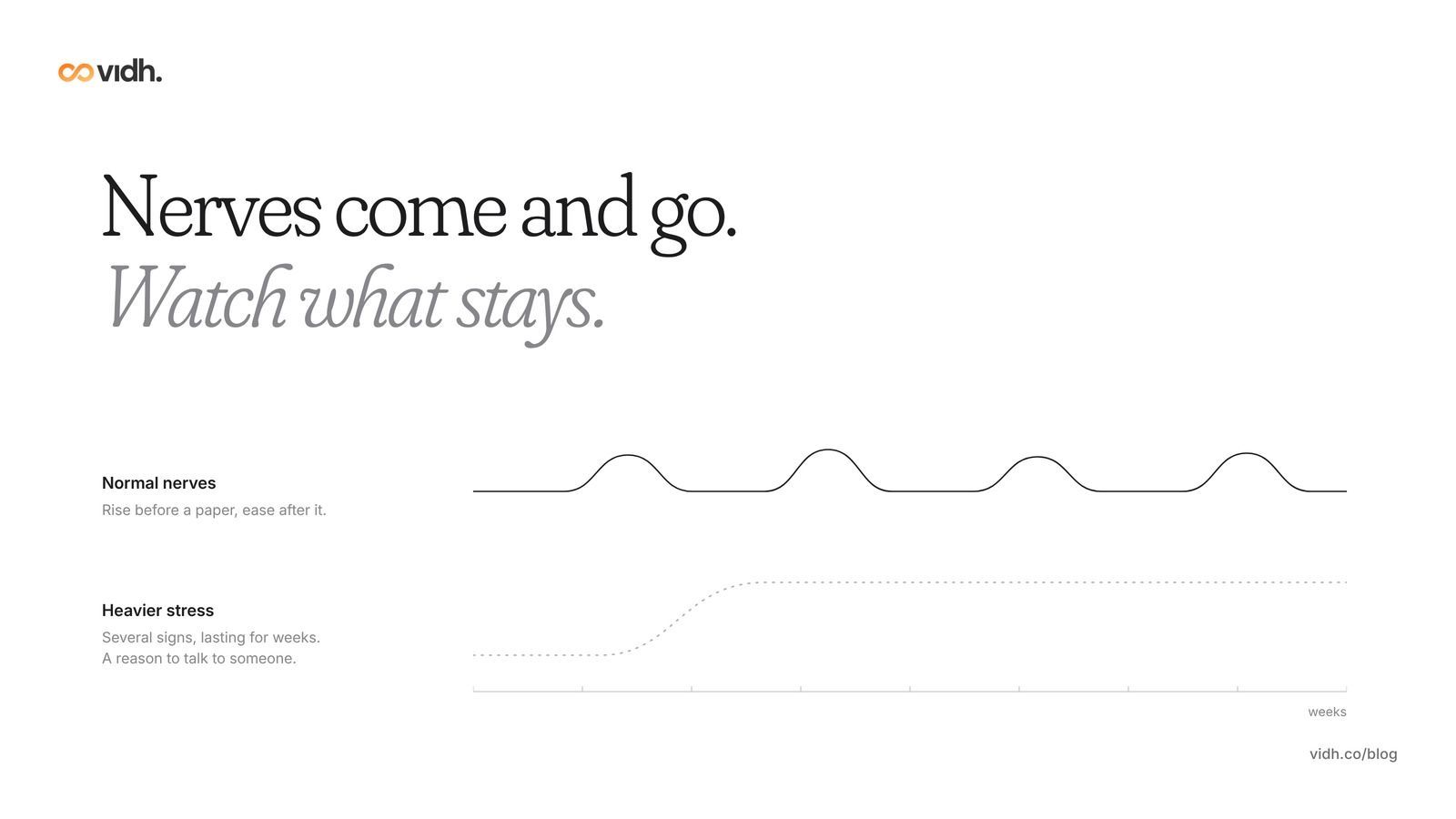
Is it normal exam stress or something heavier?
Most students feel some stress before board exams. A bit of pressure can push a teenager to start revising. The American Psychological Association puts it this way: in the short term, stress can "inspire a teen to study when he'd rather be out with friends", but chronic stress, for example "from unrelenting school pressures", is different (APA).
Usually normal nerves:
- Worry about a particular subject or paper
- Some trouble falling asleep before a big exam
- Being a bit short-tempered in the weeks before
- Feeling better once a paper is done
Signs stress may be getting heavier (from the NHS list of signs in children and young people):
- Worrying a lot, or feeling tense most of the time
- Headaches and stomach pains
- Not sleeping well
Being irritable
Losing interest in food, or eating more than normal
Not enjoying activities they used to enjoy
Being negative, low in mood or hopeless about the future
The APA adds signs such as sudden changes in behaviour, dropping the ball on homework, and getting sick more often (APA). One or two signs for a few days before a paper is common. Several signs that last for weeks, or that stop your child getting through the day, are a reason to talk to someone (see "When should you get help?" below).
Beyond the words: what else is a parent's job during board exams?
The scripts work best in a home that stays steady while the exams come and go. You don't need to become a second teacher.
That means:
- Keep your own worry in check. Children read our faces. The NHS notes that "staying calm yourself can help" and reminds parents that "exams do not last forever" (NHS).
- Don't add to the pressure. The NHS cites the children's helpline Childline: many children who contact it "feel that most pressure at exam time comes from their family" (NHS).
- Ask, don't take over. Ask your child how you can support their revision, rather than setting their timetable for them. A quiet place to study, past papers and a realistic plan help more than supervision.
Let them solve small problems. The APA notes that when parents "swoop in to solve every little glitch", children miss the chance to learn coping skills (APA).
Relax the small rules. During exams, the NHS suggests not worrying about household jobs left undone or untidy bedrooms.
Sleep, food and movement: what matters most?
These three basics do more for exam performance than any last-minute trick.
Sleep
- Hours. The American Academy of Pediatrics' parenting site, using American Academy of Sleep Medicine guidelines, recommends 8 to 10 hours of sleep in 24 hours for teens aged 13 to 18 (HealthyChildren.org). The NHS gives the same range: "most teenagers need 8 to 10 hours' sleep a night".
- Screens off before bed. The AAP advises turning off all screens at least an hour before bedtime and keeping phones and laptops out of the bedroom at night.
- No all-nighters. The NHS says "cramming all night before an exam is usually a bad idea", because sleep "will benefit your child far more than a few hours of panicky last-minute study".
- Teens' body clocks shift. The AAP notes that sleep–wake cycles can shift up to two hours later at puberty. A teenager who can't fall asleep at 10 pm isn't necessarily being difficult. Keep wake-up times steady, even at weekends.
Food
- Keep regular meals going, including breakfast on exam days.
- The NHS says some parents find high-sugar, high-fat and high-caffeine foods and drinks, such as energy drinks, cola and sweets, make children irritable and moody. Keep easy, healthier snacks within reach, and let your child choose some.
Movement
- The NHS says exercise "can help boost energy levels, clear the mind and relieve stress", and that walking, cycling, dancing or a game with friends all count.
- The APA cites the US recommendation of at least 60 minutes of activity a day for children aged 6 to 17 (APA). In exam months, even a 20-minute evening walk together is a good start.
When should you get help?
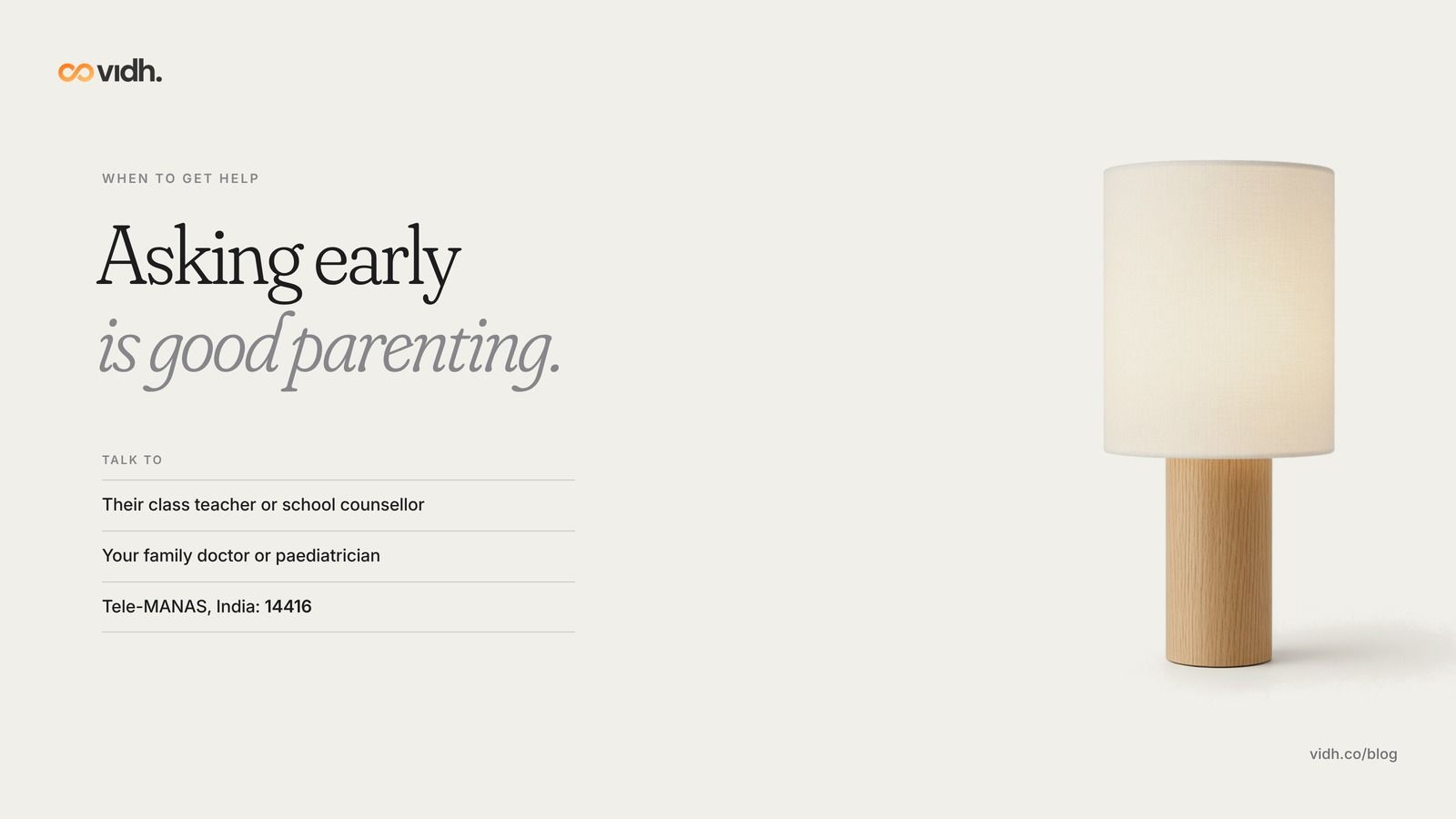
Most students feel better once exams are over. Some don't, and some struggle well before the first paper. Getting help early is a sign of good parenting, not failure.
The NHS advice is clear: get help "if your child's anxiety or low mood is severe, persists and interferes with their everyday life" (NHS). The APA adds that significant avoidance of parents "may be a sign that a teen is distressed and may need assistance" (APA). Teenagers' mental health matters beyond exams too. The World Health Organization estimates that one in seven 10–19-year-olds worldwide experiences a mental health condition, and that these "remain largely unrecognized and untreated" (WHO).
- Talk to someone if:Worry, sadness or irritability lasts for weeks, not days
- Your child stops eating or sleeping properly for a long stretch
- They withdraw from friends and family, or stop doing things they used to enjoy
- They can't face going to school or into exams
- You are simply worried and unsure what to do
Who to talk to:
- Your child's class teacher or the school counsellor. The NHS suggests encouraging your child to talk to a member of school staff they find supportive, and talking to teachers yourself if you think your child isn't coping.
- Your family doctor or paediatrician. A good first step for persistent anxiety, low mood or sleep problems.
- In India, Tele-MANAS. The government's free tele-mental-health helpline, 14416 or 1-800-891-4416, connects callers to a trained counsellor (Tele-MANAS).In an emergency. If your child talks about harming themselves or you think they are in danger, don't wait. Call your local emergency number (112 in India) or go to the nearest hospital emergency department (Ministry of Home Affairs, ERSS 112
- ).
This guide can't assess your child. Only a qualified professional can do that.
What about the exam rules?
Knowing the facts takes some of the fear out. Check dates and rules only from official sources: your board's website and your school. For CBSE, circulars and the date sheet are published on cbse.gov.in. For what the two-exam system means for Class 10 in 2027, read our guide to CBSE's two board exams in 2027. When the date sheet comes out, print it, put it where the family can see it, and plan rest days and treats around it, not just revision.
FAQ
What should I say (and not say) to my child before an exam?
Avoid comparisons with siblings, cousins or classmates, questions about expected marks, and "you should have studied more". Try reassuring, practical lines instead, such as "It sounds like you're really worried. What's the part that feels hardest right now?" or, the night before, "You've done the work. A quick look at your notes, then sleep."
How can I help my child with board exam stress?
Start with what you say: name the feeling instead of arguing with it, keep marks talk and comparisons away from mealtimes, and listen more than you advise. Then protect sleep, regular meals and some daily movement, and ask how you can help rather than taking over. Talk to a doctor or school counsellor if stress is severe or lasting.
How much sleep does a teenager need during exams?
The American Academy of Pediatrics' parenting site recommends 8 to 10 hours for teens aged 13 to 18, and the NHS gives the same range. Sleep supports thinking and concentration, so it matters more in exam season, not less.
Is exam stress normal?
Some stress is normal and can help with focus. The NHS reminds parents that "it's normal to feel anxious" before exams. It becomes a concern when it is severe, lasts a long time or stops your child coping with daily life.
When should I worry about exam stress?
If anxiety or low mood is severe, persists and interferes with everyday life, as the NHS puts it, talk to your family doctor or the school counsellor. In India you can also call the free Tele-MANAS helpline on 14416. If your child talks about harming themselves, call your local emergency number (112 in India) or go to the nearest emergency department.
Should I help my child study for board exams?
Help with the set-up rather than the content: a quiet place to study, past papers and a realistic plan your child agrees with. Leave subject teaching to teachers and tutors, and focus on keeping home steady and mealtimes free of marks talk.
Save this, or send it to a parent
Save this guide for the exam months, or send it to a parent in your child's class group who could use it. For more short, practical guides for parents, follow Vidh on Instagram.
Sources
- NHS, "Help your child beat exam stress": https://www.nhs.uk/mental-health/children-and-young-adults/advice-for-parents/help-your-child-beat-exam-stress/
- American Academy of Pediatrics, HealthyChildren.org, "Healthy Sleep Habits: How Many Hours Does Your Child Need?" (last updated 7 Aug 2026; hours from the page's AASM sleep-hours chart): https://www.healthychildren.org/English/healthy-living/sleep/Pages/healthy-sleep-habits-how-many-hours-does-your-child-need.aspx
- World Health Organization, "Mental health of adolescents" fact sheet (1 Sep 2025): https://www.who.int/news-room/fact-sheets/detail/adolescent-mental-health
- American Psychological Association, "How to help children and teens manage their stress" (updated 22 Oct 2024): https://www.apa.org/topics/children/stress
- American Psychological Association, "Talking with your children about stress": https://www.apa.org/topics/stress/talking
- CBSE, Examination circulars (tentative date sheet 24 Sep 2025; final date sheet 30 Oct 2025; LOC reminders to 21 Oct 2026): https://www.cbse.gov.in/CBSENEW/examination_Circular.html
- The Indian Express, "CBSE Class 10, 12 Schedule 2027 Live Updates" (updated 27 Oct 2026): https://indianexpress.com/article/education/cbse-date-sheet-2027-live-updates-class-10th-12th-exam-dates-download-pdf-cbse-gov-in-10907071/
- Ministry of Health and Family Welfare, Government of India, Tele-MANAS: https://telemanas.mohfw.gov.in/
- Emergency Response Support System (ERSS), Ministry of Home Affairs, Government of India: https://www.mha.gov.in/emergency-response-support-system-erss
All sources were opened on 27 Oct 2026.