Back
Night-Before School Bag: 5 Things by the Door
5 min read
A night-before school checklist: five things by the door, a lighter bag, a steady bedtime and screens off early, for calmer school mornings.
By Bhagya · Last updated: 31 October 2026
Short answer: Calm school mornings are made the night before. Before bed, put five things by the door: the uniform, a bag packed from tomorrow's timetable, shoes, lunch and a water bottle, and any signed notes or the school diary. Keep the bag light, keep bedtime the same every night, and switch screens off well before bed.
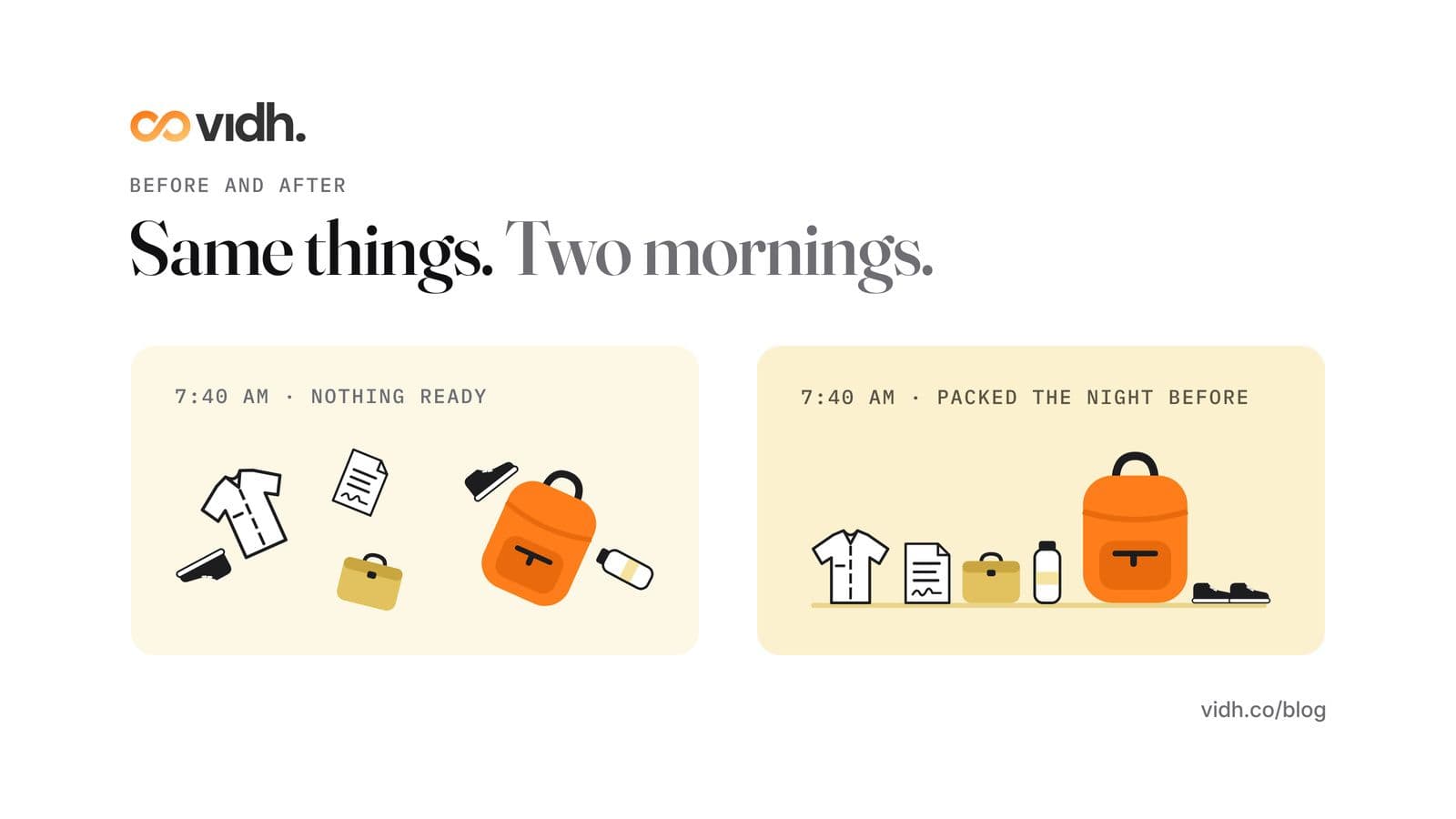
It's 7:40 am. One shoe is under the sofa. The maths book is on the dining table, under yesterday's newspaper. The permission slip that was due today is still unsigned, somewhere in the bag's front pocket, next to a banana from Tuesday. Everyone is shouting, nobody has eaten, and the school bus is two streets away.
Most school-morning chaos isn't really about the morning. It's about decisions that were left until the moment there was no time to make them. Move those decisions to the evening, when there is time, and the morning has much less to do.
This guide covers the five things to put by the door, how to pack a bag that's light enough to carry, why sleep matters more than any morning trick, when to switch screens off, and a picture checklist for younger children.
Key takeaways
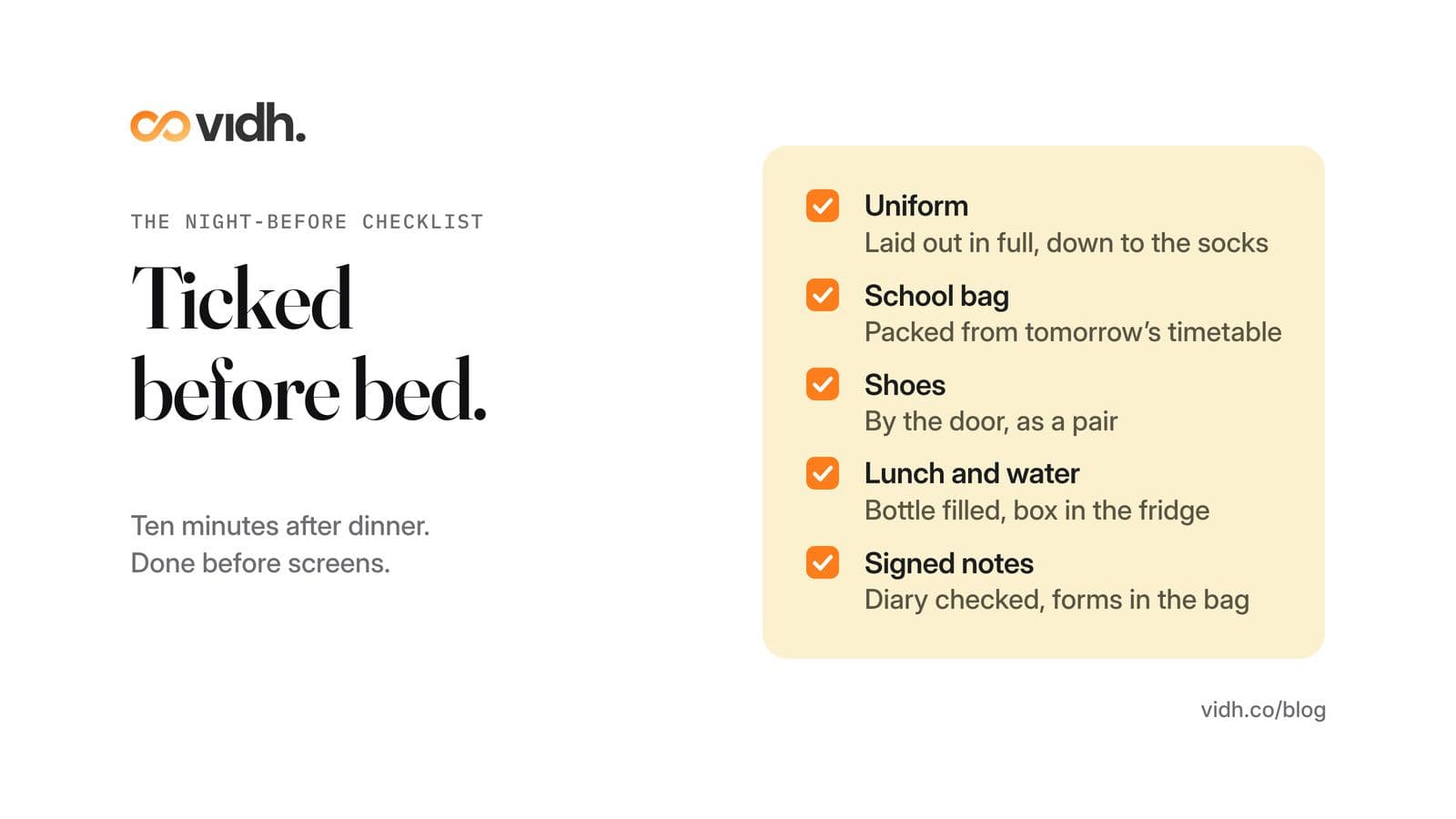
- Five things, one place. Uniform, packed bag, shoes, lunch and water bottle, signed notes. All by the door before bed.
- Pack from tomorrow's timetable, not from memory, and take out what isn't needed.
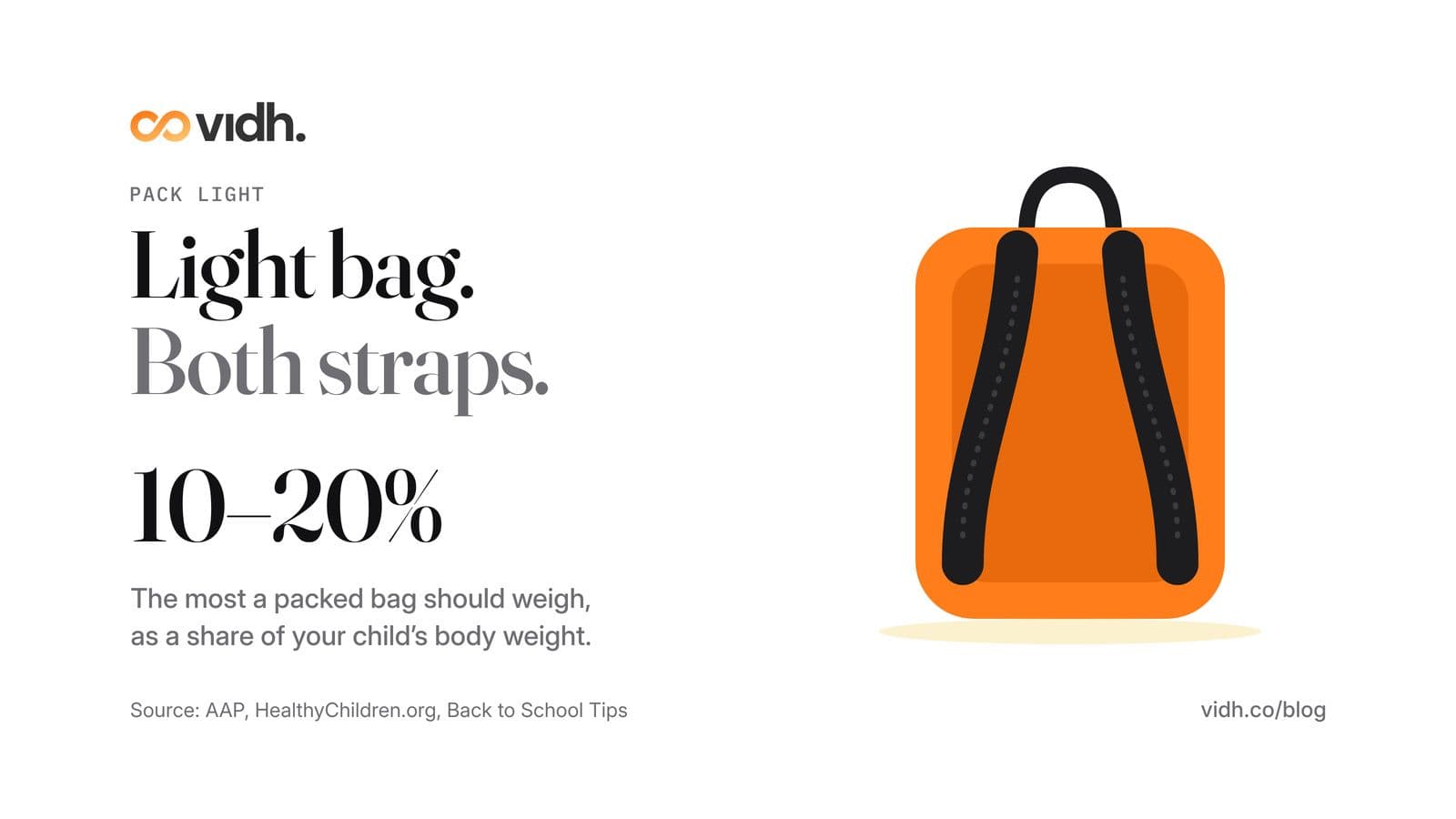
- Keep the bag light. The American Academy of Pediatrics (AAP) says a backpack should never weigh more than 10% to 20% of your child's body weight. Use both straps.
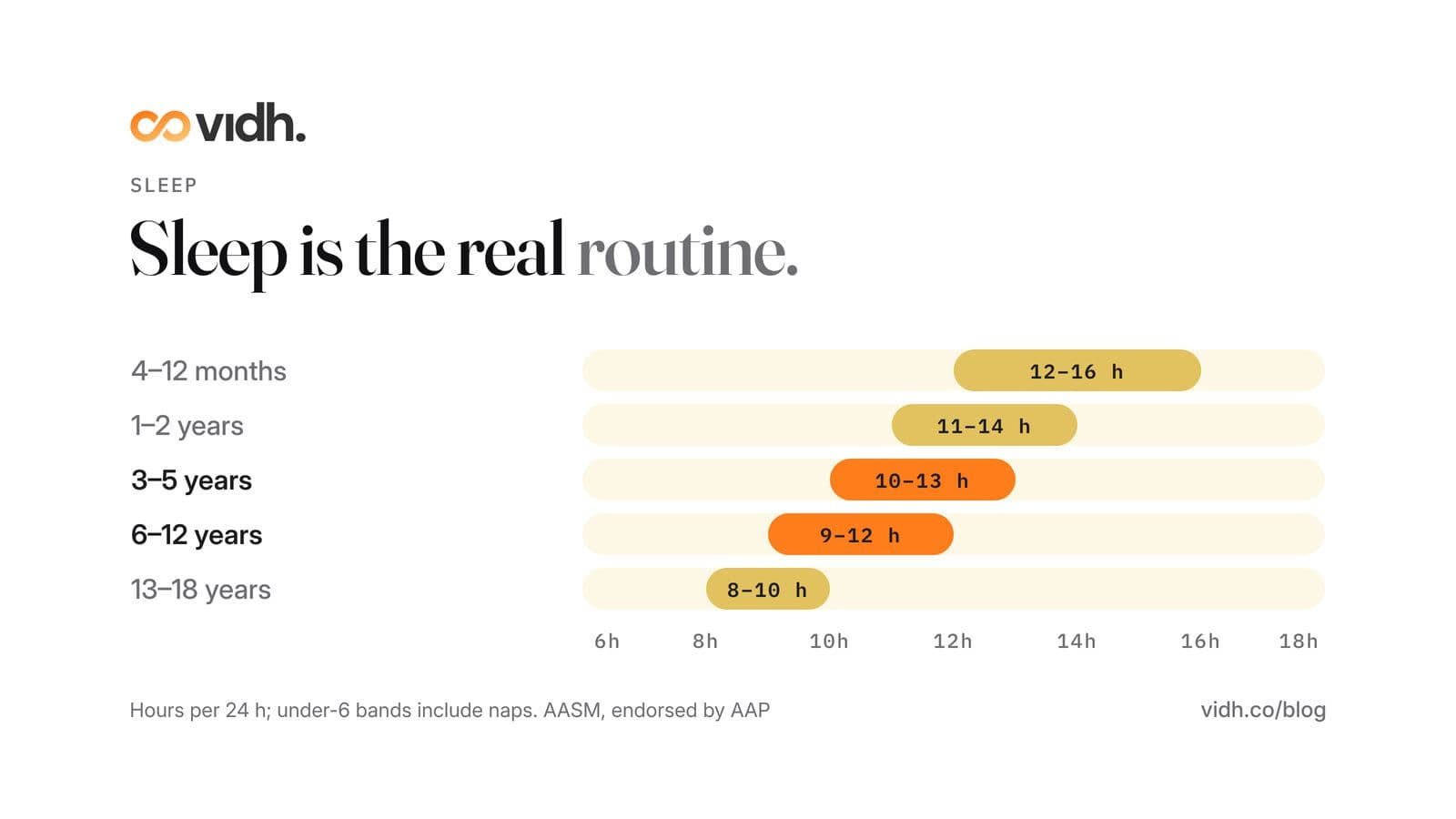
- Sleep is the real morning routine. Children aged 6 to 12 need 9 to 12 hours a night; children aged 3 to 5 need 10 to 13 hours, including naps.
- Screens off well before bedtime, and only once the bag is done.
- Use pictures for younger children, so they can check the list themselves.
The 5 things to put by the door
Pick one spot near the front door: a hook, a low shelf, a corner of the floor. Every school night, the same five things go there before bedtime. If something isn't in the spot, it isn't ready.
1. Uniform, laid out in full
Not just the shirt. Lay out everything, down to socks, belt, tie or hair clips, and check tomorrow is a normal uniform day and not a sports or house-colour day. A missing sock found at 9 pm is a small job. Found at 7:45 am, it's a crisis.
2. The bag, packed from tomorrow's timetable
Open the timetable with your child and pack for tomorrow's lessons only. Books, notebooks, pencil case, and anything special, like a library book or sports kit. Then take out what tomorrow doesn't need. This one habit keeps the bag lighter (more on that below) and means homework finished at the table actually reaches school.
3. Shoes, by the door, in a pair
Both shoes, together, with socks tucked inside if that helps. If your child has a second pair for sport, check it's in the bag or beside it.
4. Lunch box and water bottle
Pack anything that keeps overnight, put the lunch box beside the bag, and leave a note on the fridge for what has to go in fresh in the morning. Fill the water bottle, or leave it empty and open by the sink so it's the first job of the morning. The AAP suggests choosing healthier drinks such as water for your child's lunch. And plan a breakfast that's quick to make: the AAP says "children who eat a nutritious breakfast function better", with better concentration and more energy.
5. Signed notes, forms and the school diary
Check the diary, the school app and the bottom of the bag for anything that needs a signature, money or a reply. Sign it tonight and put it straight back in the bag. If your school sends notices by message or app, a two-minute check each evening is enough.
Ten minutes in the evening is usually enough once the routine is set. In the first week, do it together. After that, let your child do it and you check.
Pack light, and use both straps
A heavy bag is often a bag nobody has emptied for a week. The AAP's back-to-school advice is specific (HealthyChildren.org):
- Choose a backpack with wide, padded shoulder straps and a padded back.
- Use all the compartments, and pack heavier items closest to the centre of the back.
- The backpack "should never weigh more than 10% to 20% of your child's body weight".
- Go through the bag with your child once a week and take out what isn't needed.
- Always use both shoulder straps. Slinging a bag over one shoulder can strain muscles.
You don't need to weigh the bag every night. Do it once, with the bathroom scale: weigh your child, then weigh your child holding the packed bag, and see what the difference is. If it's too heavy, ask the class teacher which books can stay at school or at home on which days.
Sleep is the real morning routine
You can pack the perfect bag and still have a hard morning if your child is short of sleep. The American Academy of Sleep Medicine's guidelines, which the AAP supports, give these amounts for a 24-hour period (HealthyChildren.org):
- 4 to 12 months: 12 to 16 hours, including naps
- 1 to 2 years: 11 to 14 hours, including naps
- 3 to 5 years: 10 to 13 hours, including naps
- 6 to 12 years: 9 to 12 hours
- 13 to 18 years: 8 to 10 hours
To use the table, count back from wake-up time. If your 8-year-old needs to be up at 6:30 am, nine to twelve hours means being asleep somewhere between 6:30 pm and 9:30 pm. Most families will land near the later end, and that's fine; what matters is that it's enough, and that it's steady.
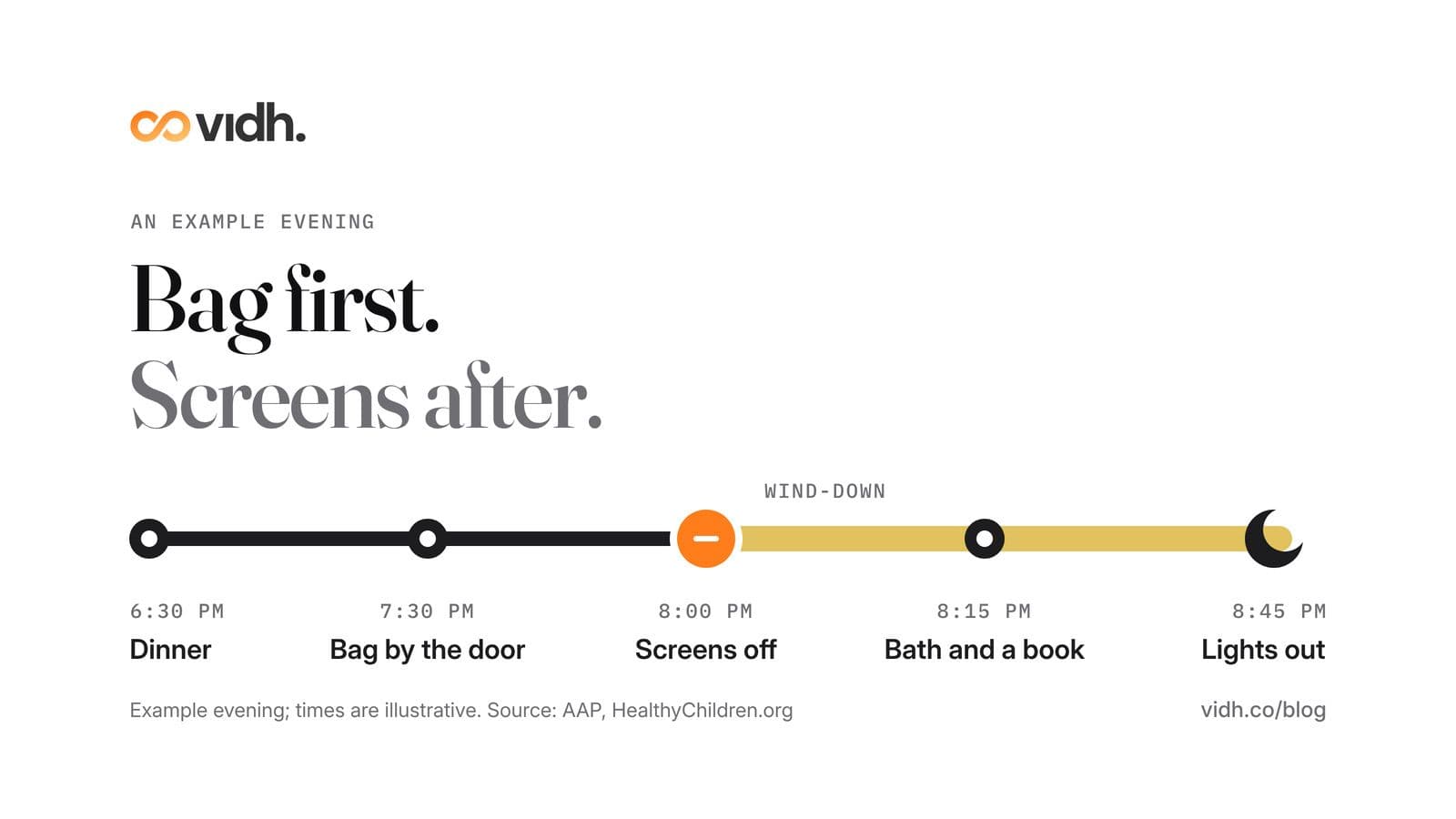
The AAP's advice is to "set a consistent bedtime for your child and stick with it every night", with a calm routine before it, such as a bath, reading together and saying goodnight. Packing the bag can be part of that routine: bag by the door, then bath, then book.
If sleep trouble keeps going, such as a child who regularly can't fall asleep, wakes a lot in the night or is very tired during the day, talk to your child's doctor.
Screens off until the bag is ready
Screens are the easiest way for a ten-minute job to become a forty-minute argument. Two simple rules help:
- Bag first, screens after. If screens are part of the evening at all, they come after the five things are by the door, not before.
- Off well before bed. The AAP says to "have your child turn off electronic devices well before bedtime". Agree a time, not a mood. Many families charge devices outside the bedroom overnight.
If you want to set these rules properly, the AAP's free Family Media Plan lets you choose the media priorities that fit your family and print or share the plan. The AAP suggests revisiting it, for example at the start of each school year.
A picture checklist for younger children
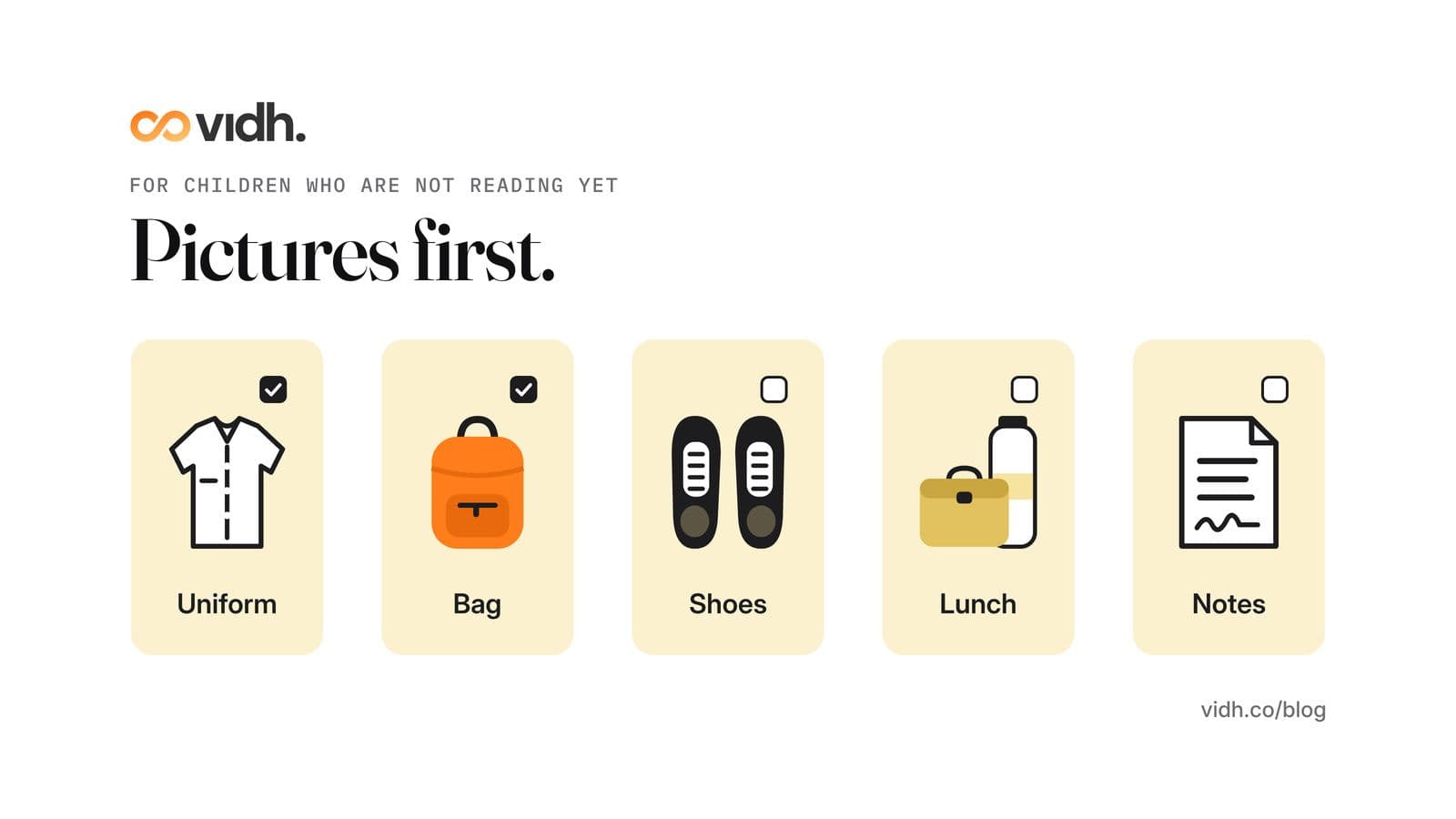
Children who can't read yet can still run their own checklist if it's made of pictures. Draw or print five simple pictures (a shirt, a bag, a pair of shoes, a lunch box and a piece of paper for notes) and stick them by the door at your child's eye level. Each evening, your child checks each one off or turns the card over.
It works because the child, not the parent, is in charge of the list. You stop being the person who nags, and become the person who checks. For older children, swap the pictures for words, and let them add their own sixth item, whether that's a library book or a sports kit day.
For more expert advice on routines and everyday parenting, UNICEF's free Parenting hub brings together tips from child development specialists.
FAQ
What should I prepare the night before school?
Put five things by the door: the full uniform, a bag packed from tomorrow's timetable, shoes, lunch box and water bottle, and any signed notes or the school diary. Plan a quick breakfast too. Once the routine is set, it takes about ten minutes.
How heavy should a child's school bag be?
The American Academy of Pediatrics says a backpack should never weigh more than 10% to 20% of a child's body weight. Pack only what tomorrow's timetable needs, put heavier items closest to the back, and use both shoulder straps.
How much sleep does my child need on school nights?
Guidelines from the American Academy of Sleep Medicine, supported by the AAP, say children aged 3 to 5 need 10 to 13 hours in 24 hours, including naps, and children aged 6 to 12 need 9 to 12 hours. Count back from wake-up time to set bedtime, and keep it the same every night.
When should screens go off before bed?
The AAP advises turning off electronic devices well before bedtime. A simple family rule is "bag first, screens after", with an agreed switch-off time and devices charged outside the bedroom.
How do I get my child to pack their own bag?
Do it together for the first week, using tomorrow's timetable. Then let your child pack and you check. For younger children, a picture checklist by the door lets them tick off each item themselves.
What if my child still can't sleep, even with a routine?
A steady bedtime and a calm routine help many children, but not all. If your child regularly struggles to fall asleep, wakes often in the night or is very tired in the day, talk to your child's doctor.
Save this, or send it to a parent
Save the five things for Sunday night, or send this to a parent in your class group who knows the 7:40 am shoe hunt all too well. For more short, practical guides for parents, follow Vidh on Instagram.
About Vidh: Vidh (vidh.co) is an AI platform for schools, built by Vidh Labs in Bengaluru, that keeps one shared record for every child across the school office, the classroom and home.
Sources
- American Academy of Pediatrics, HealthyChildren.org, "Healthy Sleep Habits: How Many Hours Does Your Child Need?" (AASM guidelines, supported by the AAP): https://www.healthychildren.org/English/healthy-living/sleep/Pages/healthy-sleep-habits-how-many-hours-does-your-child-need.aspx
- American Academy of Pediatrics, HealthyChildren.org, "Family Media Plan": https://www.healthychildren.org/English/fmp/Pages/MediaPlan.aspx
- UNICEF, "Parenting": https://www.unicef.org/parenting
- American Academy of Pediatrics, HealthyChildren.org, "Back to School Tips": https://www.healthychildren.org/English/ages-stages/gradeschool/school/Pages/Back-to-School-Tips.aspx
All four sources were opened on 31 Oct 2026 (IST) and returned HTTP 200. Quoted wording was checked on the pages. The sleep bands were read from the AASM chart image embedded in source 1 (the hours are shown as a graphic, not text).